
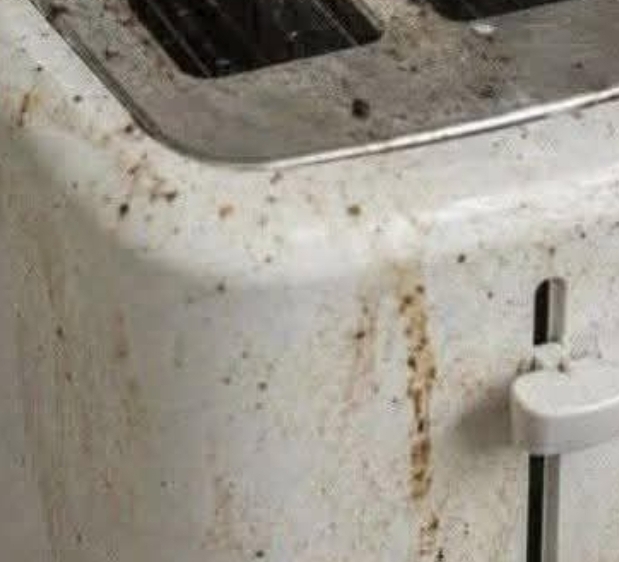
A toaster covered in crumbs, grease, dust, and baked-on residue can look beyond saving, but in many cases you can restore its appearance with a careful deep-cleaning routine. The most important thing is to remember that a toaster is an electrical appliance, so cleaning it requires more caution than cleaning an ordinary kitchen surface.
Before doing anything, unplug the toaster completely and move it away from the sink. Never clean a toaster while it is connected to electricity, and never submerge it in water.
Start by removing the crumb tray if the model has one. Empty the crumbs into the trash and wash the tray separately with warm water and dish soap. If grease has hardened onto the tray, allow it to soak for several minutes before scrubbing it with a non-abrasive sponge.
Next, turn the unplugged toaster upside down over a trash can and gently shake it to remove loose crumbs. Don’t hit it aggressively against a countertop because that can damage internal components.
For crumbs trapped inside the slots, use a soft, dry pastry brush or a clean, soft toothbrush. Carefully loosen the debris without pushing objects deep into the toaster. Never insert a knife, fork, metal spoon, or other metal object into the slots.
The outside of the toaster can usually be cleaned with a microfiber cloth lightly dampened with warm water and a small amount of dishwashing liquid. Wipe the exterior carefully, paying special attention to greasy areas and around the controls.
For stubborn grease stains, apply a small amount of diluted dish soap to the cloth rather than pouring liquid directly onto the appliance. Work gently over the dirty areas, then wipe again with a clean, slightly damp cloth.
If there are baked-on brown marks, don’t immediately reach for aggressive chemicals or abrasive powders. Excessive scrubbing can damage the toaster’s finish, especially if the exterior has a painted or coated surface.
A small amount of baking soda mixed with water can sometimes help with stubborn exterior residue, but it should be used cautiously and only on appropriate exterior surfaces. Keep the mixture completely away from the slots, heating elements, electrical controls, and openings.
Never pour water, vinegar, cleaning spray, or another liquid into the toaster slots. Moisture reaching the electrical components or heating elements can create a serious safety hazard.
The heating elements themselves should not be soaked or aggressively scrubbed. If they have accumulated loose crumbs, gently brushing the toaster while it is unplugged is generally safer than trying to wash them.
Pay attention to the condition of the appliance while cleaning. If you notice melted plastic, exposed wiring, damaged insulation, a badly frayed power cord, severe corrosion, burn damage, or a persistent electrical smell, cleaning may not be enough. The safest option may be to replace the toaster.
After cleaning, leave the appliance unplugged and allow any moisture on the exterior to evaporate completely before using it again. Make absolutely sure the interior is dry.
Once everything is clean and dry, reinstall the crumb tray and inspect the power cord and plug. If everything appears to be in good condition, the toaster can be tested according to the manufacturer’s instructions.
To keep it from becoming this dirty again, empty the crumb tray regularly and wipe the exterior whenever grease or food residue appears. Keeping the toaster away from splashing cooking oil can also significantly reduce buildup.
One thing you should never do is spray an all-purpose cleaner directly into the toaster. Aerosol cleaners and liquids can enter areas that are difficult to dry and may damage electrical components.
You also shouldn’t attempt to clean a plugged-in toaster with a wet cloth, even if you’re only wiping the outside. Unplugging it first takes only a few seconds and dramatically reduces the risk of an electrical accident.
A neglected toaster can often be cleaned surprisingly well, but safety should always come before appearance. Unplug it, remove loose crumbs, clean removable parts separately, wipe the exterior with minimal moisture, keep liquids away from the openings, and inspect the appliance for electrical or heat damage before using it again.
If the toaster has extensive internal burning, melted components, or electrical damage, replacing it is safer than trying to restore it.