
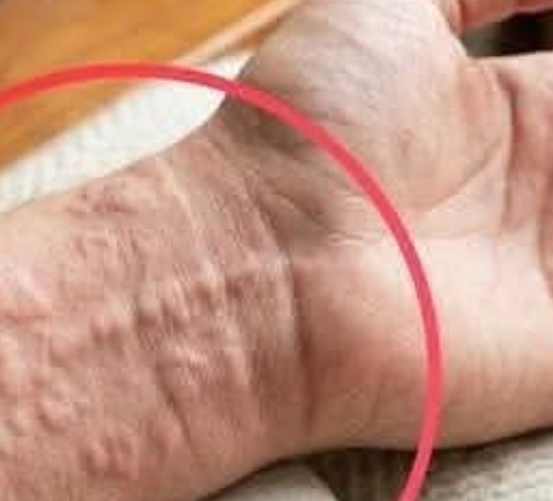
Waking up with raised, patterned indentations or irritated welts on your skin is a surprisingly common morning surprise. While clickbait headlines often sensationalize these marks as terrifying skin conditions, the reality usually comes down to three main culprits: prolonged mechanical pressure, contact dermatitis, or localized allergic reactions.
Why Your Skin Retains Patterns Overnight
When you fall asleep in a single position, your body weight presses your skin firmly against bed linens, textured blankets, or accessories like wristbands and sleep trackers.
Pressure Indentations (Sleep Lines): Fluid accumulates under the skin overnight. Sustained pressure compresses the dermal layers, creating deep grid-like or fabric-patterned impressions. While typically harmless and vanishing within an hour, persistent overnight friction can temporarily disrupt local circulation.
Pressure Urticaria: In individuals sensitive to physical pressure, sustained force against the skin can trigger hives—raised, red, or skin-colored welts known as dermatographia or pressure urticaria.
Contact Dermatitis: Sleeping with wrist bands, metallic jewelry, or untreated fabrics can cause localized contact dermatitis. Sweat trapped between your skin and a tight band creates an ideal environment for skin barrier breakdown and severe irritation.
Common Culprits in the Bedroom
Trigger How It Affects Skin Primary Symptom
Heavy Textured Blankets Press fabric weaves directly into soft tissue during deep sleep cycles. Deep, long-lasting pattern indentations.
Wearable Tech & Watches Traps sweat and bacteria against skin while exerting constant pressure. Raised, itchy welts, localized hives, or red ring marks.
Synthetic Bedding Low breathability increases night sweats and chemical irritation. Burning sensation, rash, or exacerbated eczema.
How to Prevent Overnight Skin Irritation
Wash Bedding in Hypoallergenic Detergent: Fragrances and harsh dyes in detergents can weaken the skin barrier, making it far more sensitive to pressure marks and friction.
Remove Wristwear Before Sleep: Take off watches, fitness bands, and bracelets. If you track sleep, loosen the band by at least one notch to ensure air circulation.
Choose Smooth, Breathable Fabrics: Opt for high-thread-count cotton, bamboo, or silk pillowcases and sheets to reduce surface friction.
Stay Hydrated: Well-hydrated skin retains elasticity better, helping overnight pressure marks fade significantly faster in the morning